Digital Legacy Prototype

Slide 10

Supporting Patients With Digital Legacy

This slide separates professional reflection from practical examples, making it easier to see both the clinician's role and the kinds of digital material patients may want to protect, share, or curate.

Column One

Your role as a healthcare professional

Healthcare professionals are often well placed to prompt patients and families to think about digital legacy early, gently, and in ways that feel manageable rather than overwhelming.

  • Invite reflection on what matters most to keep, share, or archive.
  • Encourage patients to consider what should remain public and what should stay private.
  • Prompt conversations about anything to put online, remove from online spaces, or preserve offline.
  • Ask whether a trusted person should be nominated to help steward accounts, files, and memorial decisions.

The aim is not to solve everything in one conversation, but to open a space where legacy can be considered as part of person-centred care.
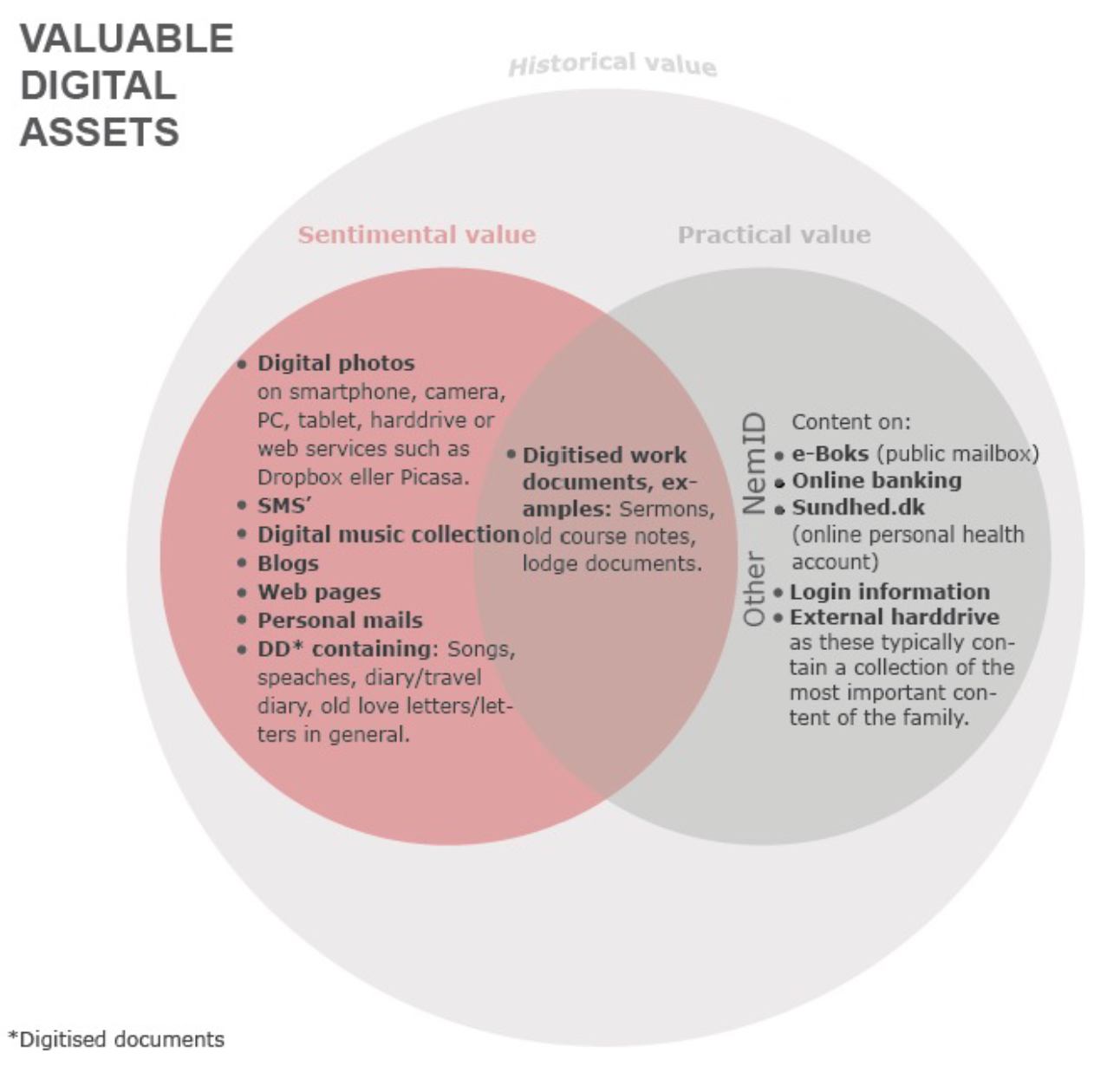
Column Two Diagram showing examples of valuable digital assets, including digital photos, text messages, blogs, webpages, emails, music collections, online banking, public mailboxes, login information, and external hard drives.

Image blurred temporarily pending permissions check and author + publisher attribution.

Visual aid showing some of the digital media and platforms through which legacy may be passed on, preserved, or managed.